House cleaning might seem like a straightforward task, vacuum, mop, dust, done. But accidents happen. A cleaner slips on a wet floor, breaks a vase, or damages your hardwood while moving furniture. That’s where liability insurance for house cleaning comes in. Whether you’re hiring professional cleaners or simply understanding what protections cover your home, knowing the basics of liability coverage can save you thousands of dollars and serious headaches. Most homeowners don’t realize what their standard homeowners policy actually covers when cleaning services are involved, which can leave them exposed.
Table of Contents
ToggleKey Takeaways
- Liability insurance for house cleaning protects you from medical bills, property damage, and legal costs when accidents occur during cleaning activities, covering gaps between your homeowners policy and a cleaner’s coverage.
- Always verify that professional cleaning services carry at least $1 million in general liability coverage and request a Certificate of Insurance listing your address before hiring.
- Your standard homeowners insurance typically covers liability incidents up to $300,000–$500,000, but read your policy’s exclusions carefully, as some deny claims from business activities or gross negligence.
- Slip-and-fall injuries and accidental property damage (water damage, chemical damage, scratched surfaces) are the most common liability claims, with costs easily exceeding $10,000 per incident.
- Consider raising your liability limits if below $300,000 and explore an umbrella policy ($150–$300 annually) if you frequently hire cleaners or host gatherings to extend protection to $1 million or more.
- Hiring an insured cleaning company reduces accident risk significantly because insurers require staff training, proper equipment, and safety protocols, making them safer and more reliable than uninsured contractors.
What Is Liability Insurance For House Cleaning?
Liability insurance for house cleaning is protection that covers bodily injury or property damage caused by cleaning activities, either by you, a family member, or a hired professional. If a cleaning service damages your home or injures itself on your property, liability coverage steps in to handle medical bills, repairs, or legal costs.
There are two main players here: your homeowners liability insurance and the cleaning company’s insurance. Your homeowners policy typically covers accidents that happen on your property up to your coverage limit (usually $300,000 to $500,000). A professional cleaning company should carry its own general liability insurance, which protects them and, indirectly, you if something goes wrong during their work.
The distinction matters. If your homeowners policy denies a claim, say, because you hired someone uninsured and they damaged your kitchen backsplash, you could end up paying out of pocket. That’s why vetting a cleaning service’s insurance credentials upfront is essential, not optional.
Why Liability Coverage Matters For Your Home
Accidents during house cleaning can range from minor to catastrophic. A slip-and-fall injury can rack up hospital bills fast. Accidental water damage from an overly zealous cleaning can affect drywall, flooring, and electrical systems. Property damage, a broken antique, a scratched countertop, stained upholstery, adds up quickly, and replacement costs often exceed the small fee you paid for cleaning.
Without proper liability coverage, you’re personally responsible for these costs. Even if the accident wasn’t technically your fault, you hired the cleaner, making you potentially liable in many jurisdictions. This is why liability insurance isn’t a luxury, it’s practical risk management.
Common Risks And Claims
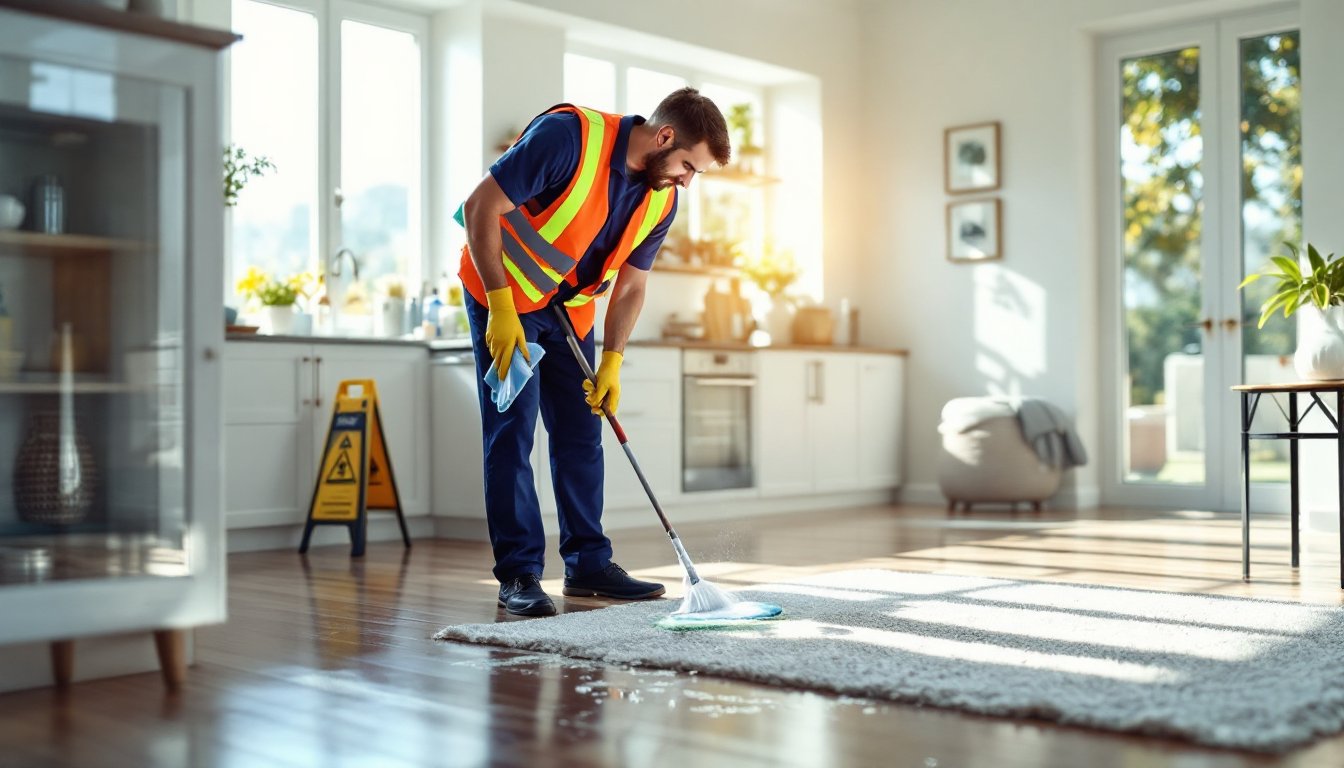
Slip-and-fall injuries are the most frequent claims. A wet floor, a tripping hazard, or slippery stairs can send a cleaner or visitor to the emergency room. Medical bills for a broken arm or head injury easily exceed $10,000. Your homeowners liability coverage should cover the medical costs and any legal fees if the injured party sues.
Property damage from cleaning is more common than many realize. A vacuum can dent hardwood if handled carelessly. Harsh chemicals can strip finishes or bleach upholstery. Steam cleaners can oversaturate carpet and cause mold. A cleaning service with proper training and insurance should prevent these issues, but accidents still happen.
Theft or loss is less common but possible. A reputable cleaning company conducts background checks and carries bonding insurance specifically for this. Always verify both when hiring.
When hiring professional cleaners, verify they carry at least $1 million in general liability coverage. Ask for proof of insurance and check that their policy is current. A company that won’t provide this documentation is a red flag.
Understanding Your Homeowners Insurance Coverage
Your standard homeowners insurance policy includes personal liability coverage, which covers accidents on your property. If a guest slips on your damp floor, or a service provider is injured while working in your home, your liability section typically kicks in.
But, there’s a catch: coverage has limits and exclusions. Most policies max out at $300,000 to $500,000 in liability per incident. Some policies exclude damage caused by “business activities” on your property, if you run a cleaning business from home, for example, you’ll need separate commercial liability insurance.
Read your policy’s fine print. Exclusions vary, but common ones include damage from gross negligence, intentional acts, or violations of local codes. If a cleaner damages structural elements because they ignored safety instructions, your insurer might deny the claim.
When you hire a professional cleaner, their company’s liability insurance is your first line of defense. If they’re uninsured, your homeowners policy covers the gap, but only up to your limits. That’s why knowing the difference matters. When comparing cleaning services, those with solid insurance are worth the premium.
Protection Against Accidental Damage And Injuries
Accidental damage during cleaning is exactly what liability insurance is designed to handle. Let’s say a professional steam cleaner oversaturates your Persian rug, causing water damage that spreads to the subfloor. Repairs could cost $3,000 to $8,000. The cleaning company’s liability policy covers this. If they’re insured, you file a claim, pay the deductible, and move forward. If they’re uninsured, you’re stuck.
The same applies to injuries. A cleaner’s equipment malfunctions, causing a minor cut. They refuse to pay the $200 emergency room bill and threaten to sue you. This is where liability insurance protects you from personal liability. Your coverage pays for the treatment (after deductible) and legal defense, if needed.
When researching cleaning companies, websites like hiring a cleaning company versus an individual cleaner break down the differences in insurance responsibility. Established companies carry robust coverage: individual contractors often don’t, which increases your risk significantly.
Proper coverage also incentivizes responsible behavior. An insured company trains its staff, carries proper equipment, and follows safety protocols because their insurer requires it. These practices reduce accidents before they happen, making insured services safer than uninsured ones, period.
How To Choose The Right Coverage For Your Needs
Choosing liability coverage starts with assessing your risk. How often do you hire cleaning services? Do you have guests frequently? Are there high-value items in your home that could be damaged? A homeowner with an active household and hired cleaners needs robust coverage: someone in a quiet apartment might manage with baseline protection.
First, review your current homeowners policy. Call your agent and confirm your liability limits and exclusions. Ask specifically about coverage for hired service providers. If your limit is below $300,000, consider raising it. The cost increase is often modest (a few dollars a month), but the protection jump is significant.
Second, always require proof of insurance from cleaning services. Don’t just take their word for it. Ask for a Certificate of Insurance listing your address as the “certificate holder” or interested party. This ensures you’re notified if their coverage lapses. Most reputable companies provide this instantly.
Third, consider a homeowners liability umbrella policy if you have substantial assets or host frequent gatherings. Umbrella policies kick in after your base coverage hits its limit, extending protection to $1 million or more for relatively low premiums ($150–$300 annually). For frequent homeowners, this is worthwhile.
Resources like HomeAdvisor offer cost estimators and contractor matching services, helping you compare cleaning options and verify credentials. Good Housekeeping provides tested recommendations for cleaning products and services, factoring in safety and quality. These tools help you make informed choices.
Conclusion
Liability insurance for house cleaning isn’t glamorous, but it’s essential. The small effort to verify coverage, review your homeowners policy, and choose insured service providers prevents costly surprises. Whether a cleaner slips on your tile or damages your cabinets, proper liability protection covers the cost and protects you from personal liability. Don’t skip this step, it’s the difference between a manageable incident and a financial headache.