Unexpected guests arrive in 30 minutes. You’ve got an inspection tomorrow. Life just happened and your home doesn’t reflect it. Emergency house cleaning isn’t about perfection, it’s about strategic damage control. A handy approach to rapid tidying means knowing what actually shows, what takes five minutes versus five hours, and where your effort yields the biggest visual payoff. This guide walks you through a realistic speed-cleaning process that any homeowner can execute without stress or burnout. You won’t deep-clean anything, but your home will look like you’ve got your act together.
Table of Contents
ToggleKey Takeaways
- Emergency house cleaning prioritizes visible high-traffic areas like entryways, kitchens, and living rooms where guests form instant impressions.
- A 15-minute speed cleaning game plan focuses on decluttering first, then tackling visible dirt with microfiber cloths and strategic surface wiping.
- Strategic cleaning targets problem zones: clear entryways, wipe kitchen appliances and counters, and clean bathrooms thoroughly since these areas signal overall home maintenance.
- Keep essential emergency cleaning supplies on hand—microfiber cloths, all-purpose cleaner, toilet bowl cleaner, trash bags, and a broom—in a rolling caddy for quick access.
- Emergency house cleaning abandons perfectionism and focuses on visual impact: hidden clutter, clean surfaces, and an organized entry make homes appear well-maintained without deep-cleaning efforts.
Assess Your Space and Prioritize What Matters Most
Before touching a mop or grabbing a trash bag, take 60 seconds to walk through your home like a visitor would. What do they see first? The entryway, kitchen, and living room are always priority zones because they’re the open, high-traffic areas where clutter and mess are most visible. A bedroom door can stay closed: a bathroom mirror can’t.
Make a quick mental list of three zones that genuinely need attention. Don’t try to fix the whole house. Ask yourself: Is this area visible to guests? Does it take five minutes or fifty to improve? Visible clutter (shoes, dishes, papers) reads as “dirty” faster than a slightly dusty shelf that no one can see. Spot-targeting high-impact areas beats spreading yourself thin across tasks that won’t move the needle visually.
The 15-Minute Speed Cleaning Game Plan
Declutter High-Traffic Areas Fast
Start by removing anything that doesn’t belong in your priority zones. Grab a laundry basket or large garbage bag and do a quick sweep: shoes off the floor, dishes into the kitchen, papers into a pile. Clutter removal takes seconds and delivers the fastest visual transformation. Close cabinet doors, fluff couch cushions, and straighten throw blankets. This isn’t organizing, it’s hiding and tidying surface-level chaos.
Work room by room, spending no more than 4–5 minutes per zone. Move items into a closet, another room, or a single basket that you’ll deal with later. Guests won’t notice a shoes-and-books basket shoved into a bedroom closet, but they’ll absolutely notice shoes scattered across the entryway.
Tackle Visible Dirt and Surface Mess
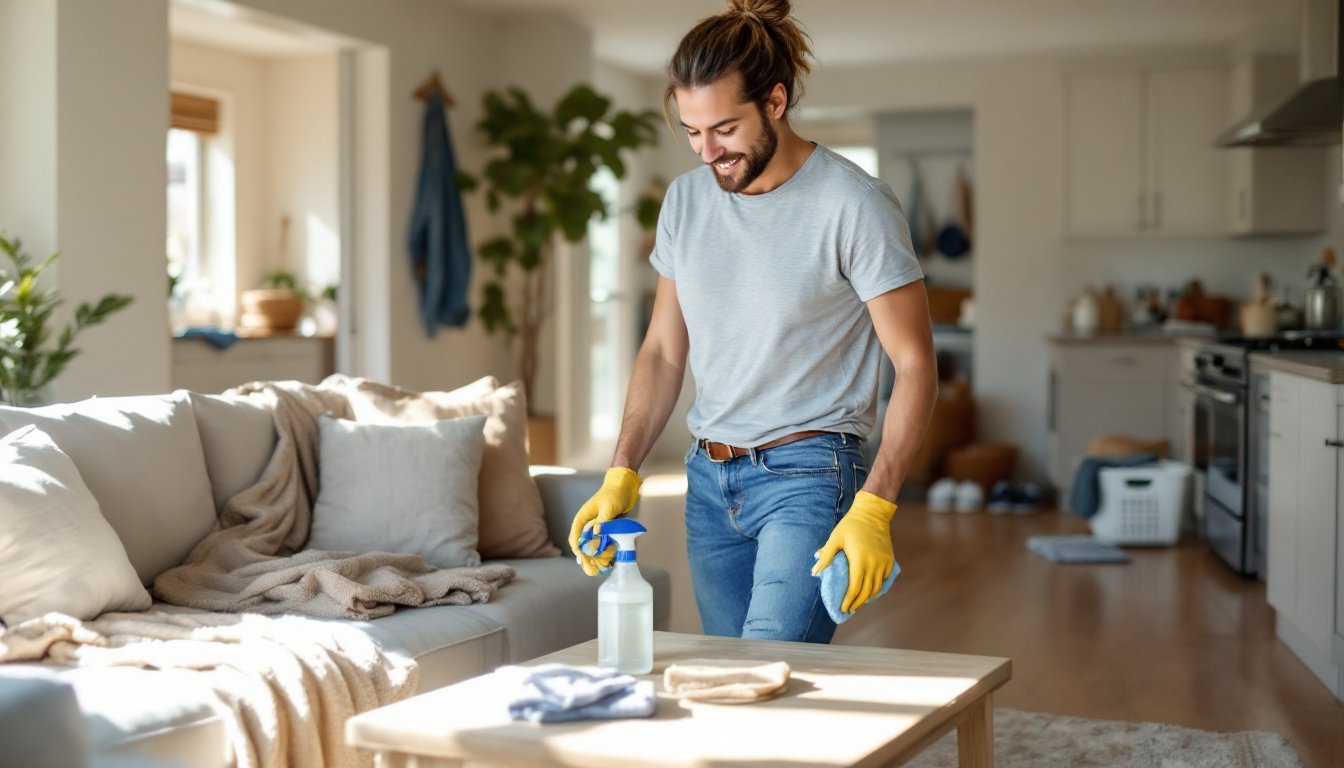
Once clutter is out of sight, hit visible dirt fast. Use a microfiber cloth to dust coffee tables, kitchen counters, and bathroom surfaces. Microfiber grabs dust and fingerprints without needing spray, dry cloth does the job in seconds. Wipe down light switches and doorknobs: people touch these and unconsciously register them as either clean or grimy.
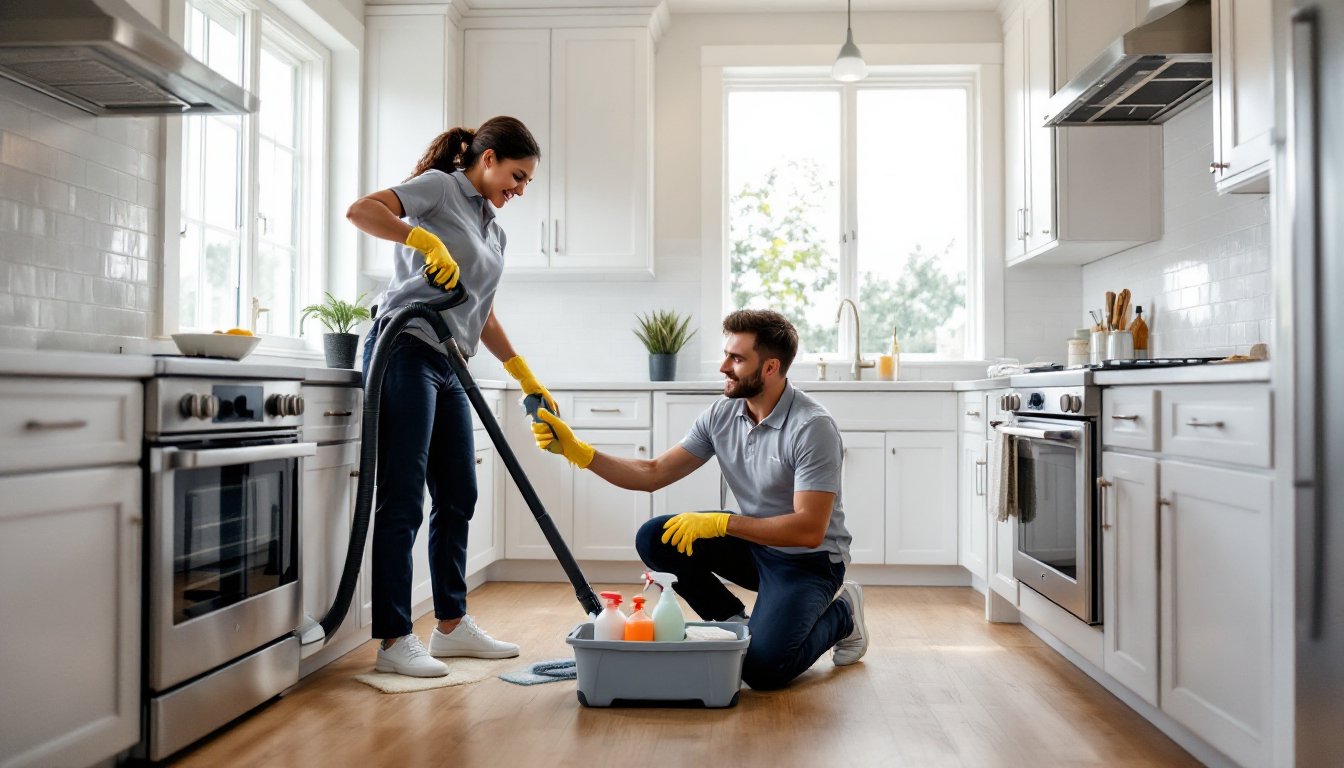
In the kitchen, load dishes into the dishwasher or sink, wipe the stove and counter, and clear crumbs. A clean stovetop and empty counter change the entire feel of that room. In the bathroom, wipe the sink, spray the mirror, and make sure the toilet seat is down and the floor is clear. Bathroom expectations are simple: no visible toothpaste residue, no hair, and a toilet that looks maintained.
Strategic Cleaning for Common Problem Zones
Entryways demand attention because they set the tone immediately. Sweep or vacuum just inside the door, wipe the glass if there’s an entrance door, and make sure that area is free of shoes, bags, or clutter. A clear, clean entry signals that the rest of the home is under control.
Kitchens reveal neglect fast. Wipe appliance fronts, especially the refrigerator (fingerprints and smudges are dead giveaways). Clear the counters completely, or at least move everything into one organized zone. Sink full? Fill it with hot soapy water, drop dishes in, and close the cabinet door. Dried-on splatters on the stovetop take 30 seconds with a damp cloth and change everything. A professional cleaning service would spend 45 minutes here: you’re spending 5, so focus on what shows.
Bathrooms benefit from speed targeting, too. Spray all-purpose cleaner on surfaces and wipe quickly. Toilet bowl cleaner under the rim looks intentional and clean. A clear bathroom counter (medicine cabinet open, toothbrush holder hidden or cleared) feels twice as spacious and twice as tidy. Hang fresh towels if you have them: rolled towels on a shelf beat bunched towels any day.
Living rooms and bedrooms need less intervention because guests won’t spend long there. Make beds (even a half-made bed with pillows propped looks intentional), straighten throw pillows, and ensure there’s a clear path to walk. Close closet doors and any bedroom doors you’d rather keep private. Visible floor space and arranged furniture do the heavy lifting here without actual cleaning.
Tools and Supplies You Need on Hand
Keep a basic emergency cleaning kit in an under-sink cabinet or closet. You don’t need much, and having these ready means you won’t waste time hunting supplies when time is short.
Essential supplies:
- Microfiber cloths (3–5 count)
- All-purpose cleaner (spray bottles work best for speed)
- Toilet bowl cleaner
- Paper towels or reusable towels
- Trash bags (large, for quick clutter dumping)
- Laundry basket or plastic bin (for moving items between rooms)
Tools:
- Broom and dustpan (faster than a vacuum for spot-cleaning)
- Vacuum (corded or cordless, depending on your home size)
- Toilet brush
- Feather duster or microfiber duster (for high surfaces)
You don’t need expensive products. Budget-friendly all-purpose cleaner from any grocery store works as well as premium brands: the difference is marketing, not cleaning power. Hydrogen peroxide mixed with water (50/50) handles tough bathroom stains. Baking soda sprinkled in the toilet overnight tackles discoloration.
According to research from Good Housekeeping, microfiber cloths outperform cotton for speed and effectiveness because they trap dust without spreading it. Skip paper towels if you’re environmentally conscious or budget-conscious: reusable cloths dry quickly and last months. Invest in a cordless vacuum if your home is over 1,500 square feet, no cord tangles, no fumbling with outlets. For smaller spaces, a good broom covers entryways and visible floors in seconds.
Store supplies in a rolling cart or caddy so you can move between rooms without multiple trips. The Spruce recommends keeping a cleaning caddy in every bathroom and one under the kitchen sink for zero-delay access during crunch time. Label containers so everyone in the household knows where things go after cleaning.
Conclusion
Emergency house cleaning works because it abandons perfectionism and targets visual impact. Clear surfaces, hidden clutter, and a clean entryway signal a well-maintained home in 15 minutes. Guests don’t inspect baseboards or under sink cabinets, they notice what’s in front of them. Master these quick-win strategies and you’ll handle last-minute guests, inspections, or unexpected events without panic. Keep supplies within arm’s reach, know your priority zones, and work systematically through each room. You’ve got this.