
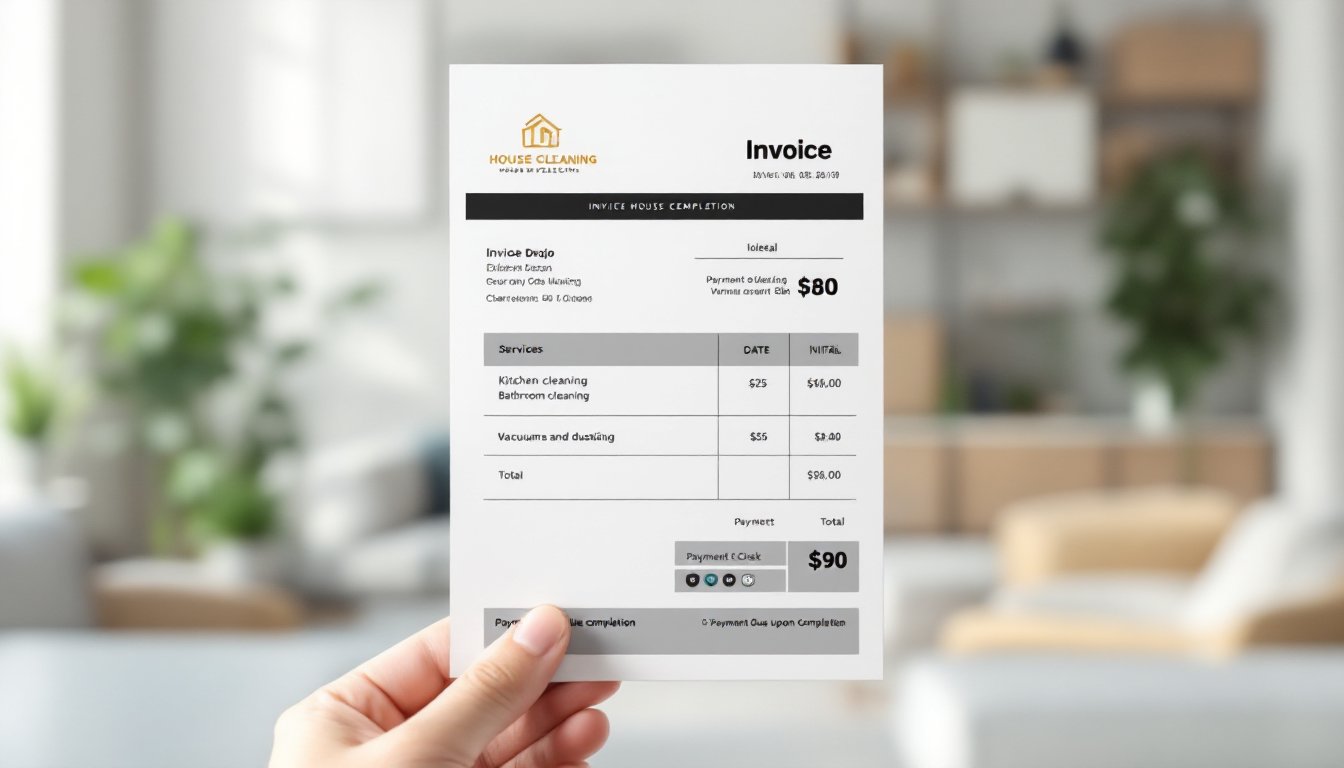
Running a cleaning business means juggling schedules, team coordination, and client communication, but invoicing shouldn’t add to that burden. A professional house cleaning invoice template saves time, builds trust with customers, and creates a clear payment trail for your business. Whether you’re a solo operator or managing a team of cleaners, having a standardized template ensures consistent branding and reduces billing disputes. This guide walks you through the essential elements of a cleaning invoice, shows you how to customize templates for different service types, and explains best practices that keep your business running smoothly.
Table of Contents
ToggleKey Takeaways
- A professional house cleaning invoice template saves time, builds client trust, and creates a clear payment trail that protects your business legally and financially.
- Include essential elements such as your business branding, invoice number, client details, itemized service breakdown, taxes, and total amount due to prevent billing disputes.
- Customize your invoice template for different service types—standard cleanings, deep cleanings, move-in/move-out, and specialty services—with detailed line items that justify your pricing.
- Organize your invoice layout with clear headings, consistent fonts, and white space; bold the total amount due and include a specific due date (typically 7–14 days) to encourage on-time payment.
- Provide transparent payment instructions with multiple options (cash, check, Venmo, PayPal) and store all invoices digitally for easy access during tax season or payment disputes.
- For regular clients, note the recurring service schedule on invoices to prevent missed appointments and maintain consistent revenue flow.
Why Your Cleaning Business Needs A Professional Invoice Template
A professional house cleaning invoice template isn’t just about looking sharp, it’s a business essential. Without standardized invoicing, you risk late payments, confusion over what services were performed, and difficulty tracking revenue. Clients take your business more seriously when they receive a polished, organized invoice rather than a hastily scribbled note on the back of a receipt.
Invoices create a paper trail for tax purposes and help you manage cash flow. When a client disputes a charge months later, you’ll have clear documentation of dates, services, and amounts agreed upon. This protects both you and the homeowner.
A template also saves countless hours. Once you set up your invoice format, including your logo, standard rates, and payment terms, you can generate new invoices in minutes by simply filling in the client name, date, and services provided. For cleaning businesses that send dozens of invoices monthly, this efficiency pays for itself immediately.
Essential Elements Every House Cleaning Invoice Must Include
Business Information And Branding
Your invoice should open with your business name prominently displayed, followed by your contact information: phone number, email address, and physical business address (or service area if you’re mobile). Include your business logo if you have one, this reinforces your brand and makes the invoice feel professional.
Add your invoice number and the date issued. This might seem basic, but it’s critical for bookkeeping and follow-up correspondence. Many cleaners use a sequential numbering system (Invoice #001, #002, etc.) or date-based numbers (202601-001 for January 2026, first invoice). Choose whatever system works for your accounting software.
If your cleaning business requires licensing or insurance, consider including a brief statement like “Licensed & Insured” or your license number. This gives clients confidence and differentiates you from unlicensed competitors.
Client Details And Service Breakdown
Next, list the client’s name, address, and phone number. If you service multiple properties for the same client, clarify which address this invoice covers. Be specific: “456 Oak Street, Apt. 3B” is better than “Oak Street residence.”
Create a clear service section that breaks down exactly what was cleaned and how much each service cost. Instead of a single line that says “House cleaning $150,” detail the work: “Standard 3-bedroom house cleaning: $120” and “Carpet shampooing (living room): $30.” This transparency prevents misunderstandings and justifies your pricing.
Include the service date and any applicable notes about special requests or extra work. If a client asked you to clean out the garage on top of the standard cleaning, note it. This protects you if they later claim you didn’t complete the full job.
Add a subtotal line, then any applicable taxes (check your local requirements), and a final total due. Most residential cleaning services are taxed, though regulations vary by location. Include payment method information here, cash, check, Venmo, credit card, so the client knows how to pay.
Customizing Your Template For Different Service Types
One invoice template can’t fit every job. A deep clean takes twice as long as a standard maintenance clean, and pricing should reflect that difference. Create variations of your template for common service types: standard cleaning, deep cleaning, move-in/move-out cleaning, and specialty services like window washing or carpet cleaning.
For standard cleanings, list room-by-room services. A typical invoice might include “Kitchen (appliances, counters, sink): $25,” “Bathrooms (toilets, tubs, mirrors): $35,” and “Living areas (vacuuming, dusting, surfaces): $30.” This format is immediately understandable and helps clients see what they’re paying for.
Deep cleaning invoices justify higher costs by itemizing extra work: “Baseboards and trim cleaning,” “Window blind dusting,” “Inside oven cleaning,” and “Grout scrubbing.” Prospective clients reviewing a house cleaning invoice template often compare pricing, so detailed line items make your rates look fair rather than arbitrary.
Move-in and move-out cleanings often command premium pricing because they’re exhausting, full-property deep cleans. Your invoice should reflect this: list the property size (square footage if available), specify it’s a pre-occupancy or post-occupancy clean, and break down major tasks like “Kitchen deep clean (all appliances inside and out): $80” and “Bathroom tile and grout restoration: $60.”
If you offer specialty services through partner contractors, keep them on a separate line with clear pricing. This prevents confusion about which services you performed versus which you subcontracted.
Best Practices For Invoice Organization And Payment Terms
Your invoice layout directly affects whether clients pay on time. Use clear headings, consistent fonts, and white space to guide the eye. A cluttered invoice makes clients nervous about pricing and delays payment.
Bold or highlight the total amount due so there’s no confusion. Place it near the bottom in a visually distinct box. Include a due date, this sets expectations. Most cleaning businesses request payment within 7–14 days, though many residential clients pay immediately upon completion.
Add a “Payment Terms” section that specifies your expectations: “Payment due upon completion” is standard for most residential cleaning jobs. For commercial contracts or large projects, you might offer “Net 15” (payment due within 15 days) or request a deposit before the work begins.
Include clear payment instructions. “Please pay by cash, check, or Venmo to [your contact]” tells the client exactly what to do. If you use a payment app like PayPal or Square, include the link or QR code. This removes friction and speeds up payment.
For regular clients, consider noting “Recurring service: [date]”: this reminds them of upcoming scheduled cleanings and prevents missed appointments. Resources like Angi provide contractor hiring guidelines that echo these professionalism standards for home service providers.
Store all invoices in a folder, either digital or physical, organized by date or client name. Digital storage is preferable: even a simple Google Drive folder beats shoebox accounting. When tax season arrives or a client disputes a charge, you’ll have everything in seconds.
If a client doesn’t pay within your stated due date, a polite follow-up email or call prevents bad feelings and keeps the relationship intact. Template language like “Gentle reminder: Invoice #045 for [date] cleaning is now due. Please let me know if you have questions” keeps things professional.
Conclusion
A well-designed house cleaning invoice template elevates your business from hobbyist to professional operation. It clarifies expectations, accelerates payments, and protects you legally. Customize your template for different service types, keep the layout clean and organized, and establish clear payment terms. Your clients will appreciate the clarity, and your bottom line will thank you for the efficiency gain.